2026 Housing Market Predictions


The 2025 housing market has been a mixed bag. Mortgage rates, though down from their 2023 highs near 8%, remain elevated enough to squeeze affordability. Home prices have stayed stubbornly high despite forecasts of a cooldown, while inventory has improved slightly but remains tight in many areas.
As the year winds down, many are looking ahead to what’s next. Will prices finally ease, or will limited supply keep the pressure on? To get a clearer picture, we gathered expert housing market predictions for 2026 to explore what buyers and sellers can expect in the year ahead.
More homes sold. Lower rates. Lower inflation.
Heading into 2026Economists with Fannie Mae are painting a slightly rosier picture of what they see the overall economy looking like.
In a pair of newly released forecasts, the mortgage giant provided its expectations for where home sales, mortgage rates, inflation and the broader economy will head moving forward.
“Our total home sales outlook for 2025 was revised to 4.74 million, up from 4.72 million previously,” Fannie wrote in its forecast. “Our 2026 home sales projection is 5.16 million, unchanged from prior forecast.”
Economists at the mortgage giant are predicting sales of existing homes will grow by 9.6 percent next year, to 4.45 million, with new home sales also growing by 4.7 percent, to 704,000.
Current housing market overview
Of course, numbers only tell part of the story. To put today’s housing market into a better context – how we got here, where things stand now, and what may be coming next with home prices, inventory, and buyer versus seller leverage – let’s take a closer look at what the industry insiders have to say.
Nadia Evangelou, senior economist and director of real estate research, National Association of Realtors: “2025 was another year of a sluggish housing market. Sales activity did not pick up as much as we anticipated earlier this year, even though inventory has been rising and offering buyers more options. Affordability remains the market’s main challenge. Even with more homes available, many are still priced out of reach for the typical buyer, which continues to hold back overall activity.”
Kenon Chen, executive vice president, Strategy and Growth, Clear Capital: “The housing market is currently entering a period of transition. There have been encouraging signs of improvement in affordability with the recent reduction of mortgage rates and a slowing of home price appreciation nationally. However, affordability remains a challenge since a mortgage payment on a median home still consumes over 30% of a median income.”
Albert L. Lord III, founder/CEO, Lexerd Capital Management: “The U.S. housing market is stabilizing after the post-pandemic surge. Prices remain near record highs, with modest year-over-year gains, while sales volumes are subdued due to affordability pressures. We got to this point based on the combination of the Federal Reserve tightening from 2022 to 2024, which pushed mortgage rates to multi-decade highs; a persistent structural housing shortage stemming from underbuilding since the Great Financial Crisis of 2008; and the benefits of homeowners staying put.”
Ralph DiBugnara, president of Home Qualified: “The approach through 2025 toward the housing market has seemed to be wait and see. It has slowed, with affordability becoming the main issue. House prices have not come down enough to meet the return to normalcy of interest rates. Because of a housing shortage and spike in prices over the last 5 years, homes have become much less affordable. That combination and inflation driving up the costs of living has caused buyers to take a very cautious approach. On the other side, sellers are hanging onto their homes with massive amounts of equity due to a lack of affordable options to live elsewhere.”
Steven Glick, director of mortgage sales for HomeAbroad: “As we close out 2025, I’d call the housing market cautiously stable: no boom, no collapse. Sales are modest, prices are inching up, and inventory is gradually loosening, but affordability is still tight.”
Martin Orefice, founder, Rent To Own Labs: “This is a housing market defined by uncertainty, high prices, and low inventory. In some ways, this has been brewing for decades. You could look all the way back to 2008 and its impacts on home construction. Inflation is rising, immigration enforcement and tariffs are driving up costs, and falling interest rates may not be enough to counteract those forces.”
Together, these perspectives paint a picture of a market in transition, steadying but still constrained by affordability, setting the stage for housing market predictions for 2026.
Market Trends For Western Washington (Greater Seattle Metro)
Here's a summary of the key trends we're seeing:
- Increased Sales Volume: More homes are being sold, both quarter-over-quarter and year-over-year.
- Downward Pressure on Prices: While not dramatically falling, prices are generally decreasing by 3-5% and in hotter markets holding steady.
- Rising Inventory: More homes are available for sale, which is good news for buyers.
- Affordability Challenges Persist: Despite increased inventory, high home prices and mortgage rates (though they are starting to trend down) still make it tough for many to afford a home. The statewide affordability index for median-income buyers is at 60.7, meaning they only have 60.7% of the income needed to buy a median-priced home. For first-time buyers, it's even tougher, with an index of 43.3.
- Building Permit Activity is Up: New construction is also on the rise. Building permits were up 3.0% year-over-year, with 8,916 new units authorized. This could help boost supply further in the future.
2025 End of Year Forecast:
- Continued Market Balancing: We'll likely see the market continue to balance out. The increased inventory should help ease some of the pressure on buyers, while stabilizing prices will be beneficial for everyone.
- Slightly More Sales: With mortgage rates expected to remain in the 6.0%-6.5% range and inventory growth, we should see a modest increase in the number of home sales compared to 2024.
- Moderate Price Declines: Expect home prices to continue to move lower. Bidding wars are a thing of the past as inventory levels continue to climb.
- Affordability Still a Hurdle: While rates may fall slightly, affordability will remain a key issue, especially for first-time buyers, due to the high cost of homes.
2026 Forecast:
- More Predictable Market: By 2026, the market could become even more predictable. We might see further growth in housing starts as builders respond to demand, which could add more supply.
- Potential for Increased Buyer Activity: If mortgage rates continue to stabilize or even dip further, and if wages keep pace with housing costs, we could see an uptick in buyer activity.
- Regional Differences Remain: It's crucial to remember that different parts of Washington will likely experience different trends. Major metro areas might see faster appreciation and higher demand, while more rural areas could have different dynamics.
- Mortgage Rates May Gradually Decline
- For buyers, the top priority has been clear: lower mortgage rates. After peaking near 7% earlier this year, rates have started to ease—and forecasts suggest this gradual decline could continue throughout 2026.
- While the path down won’t be perfectly smooth, experts expect rates to move toward the low 6% range and possibly the high 5s. Think of it like this: when rates rise, they take the escalator; when they fall, they take the stairs. The process will be slower and a bit bumpy, but the overall trend points lower.
- Even a modest dip in rates can make a real difference in monthly mortgage payments. Compared to when rates were at 7%, today’s slightly lower rates could already save buyers hundreds of dollars each month, improving overall affordability and buying power.
Home Price Growth Will Be Steady and Sustainable
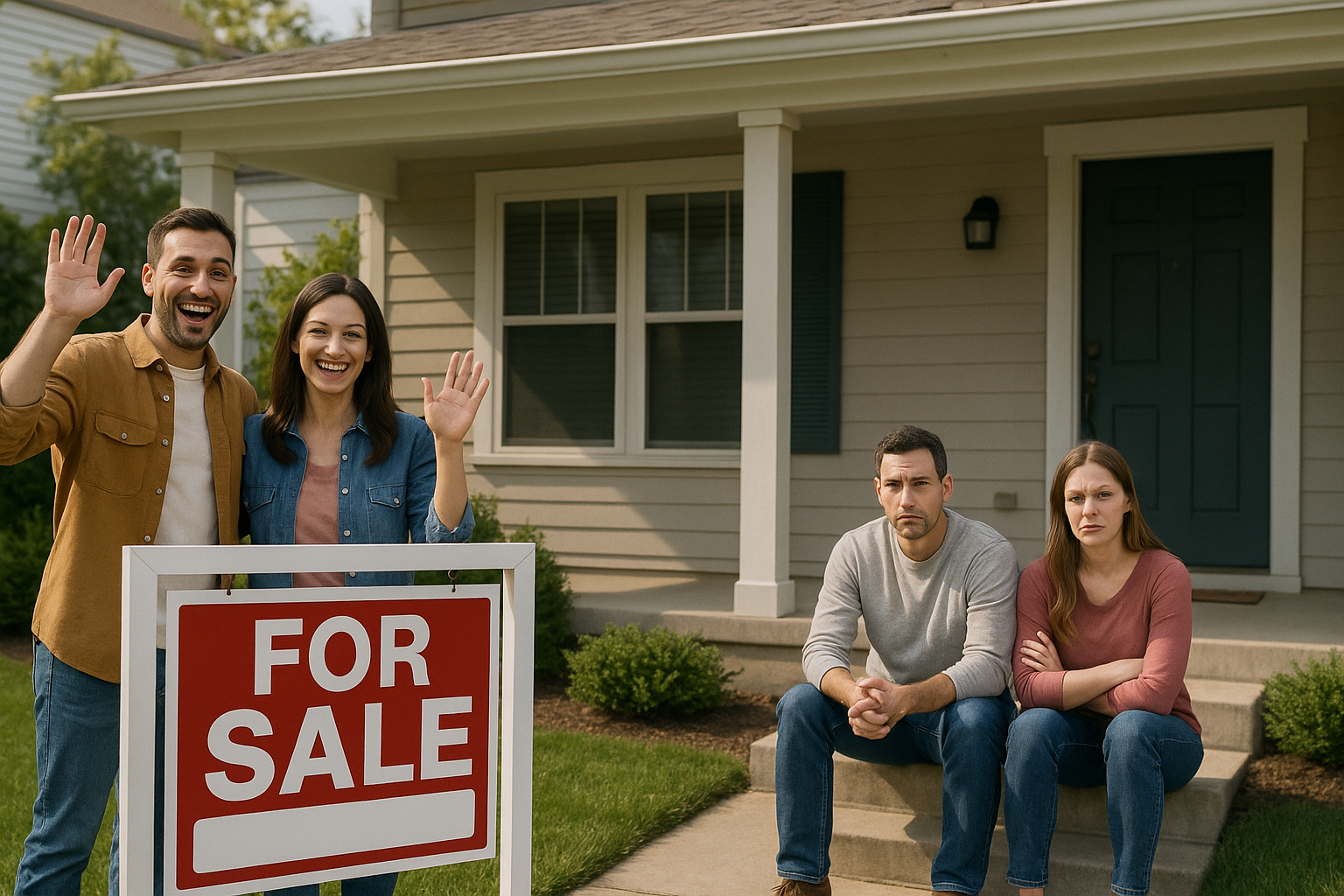
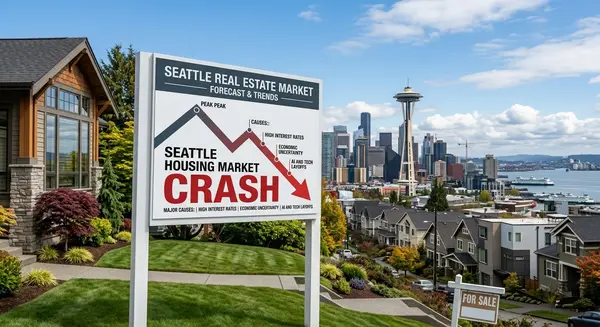
- While we expect to experience small price declines in Western Washington, a housing market crash is not expected. In fact, even in areas seeing slight dips, home values remain significantly higher than they were just a few years ago.
- Price trends will vary by location, depending largely on local inventory levels. But overall, experts expect a more balanced market with flat to modest declines, which gives buyers and sellers more predictability and helps with budgeting.
As for the broader economy, Fannie Mae economists said they expect gross domestic product (GDP) growth to end higher than expected by the end of this year. They forecast GDP growth will end at 1.9 percent by the end of this year, up from their prior forecast of 1.5 percent.
Next year, the economists anticipate GDP growth to end at 2.3 percent, up from a previous forecast of 2.1 percent, they wrote.
Fannie Mae forecasters said they expect the Consumer Price Index to end this year at 2.9 percent. That’s lower than the 3.1 percent growth they previously forecast.
They expect CPI to fall slightly next year, to 2.7 percent, but that’s up slightly from the previous forecast of 2.6 percent.
Categories
Recent Posts