Let’s Talk Housing Market Affordability: A Great Housing Reset
Housing affordability is expected to take center stage in 2026. Politicians on both sides of the aisle will respond to the widespread housing affordability crisis, introducing policies to lower costs, from YIMBY measures to expanded manufactured housing. Some of those proposals will chip away at affordability, but they won’t be an instant fix.
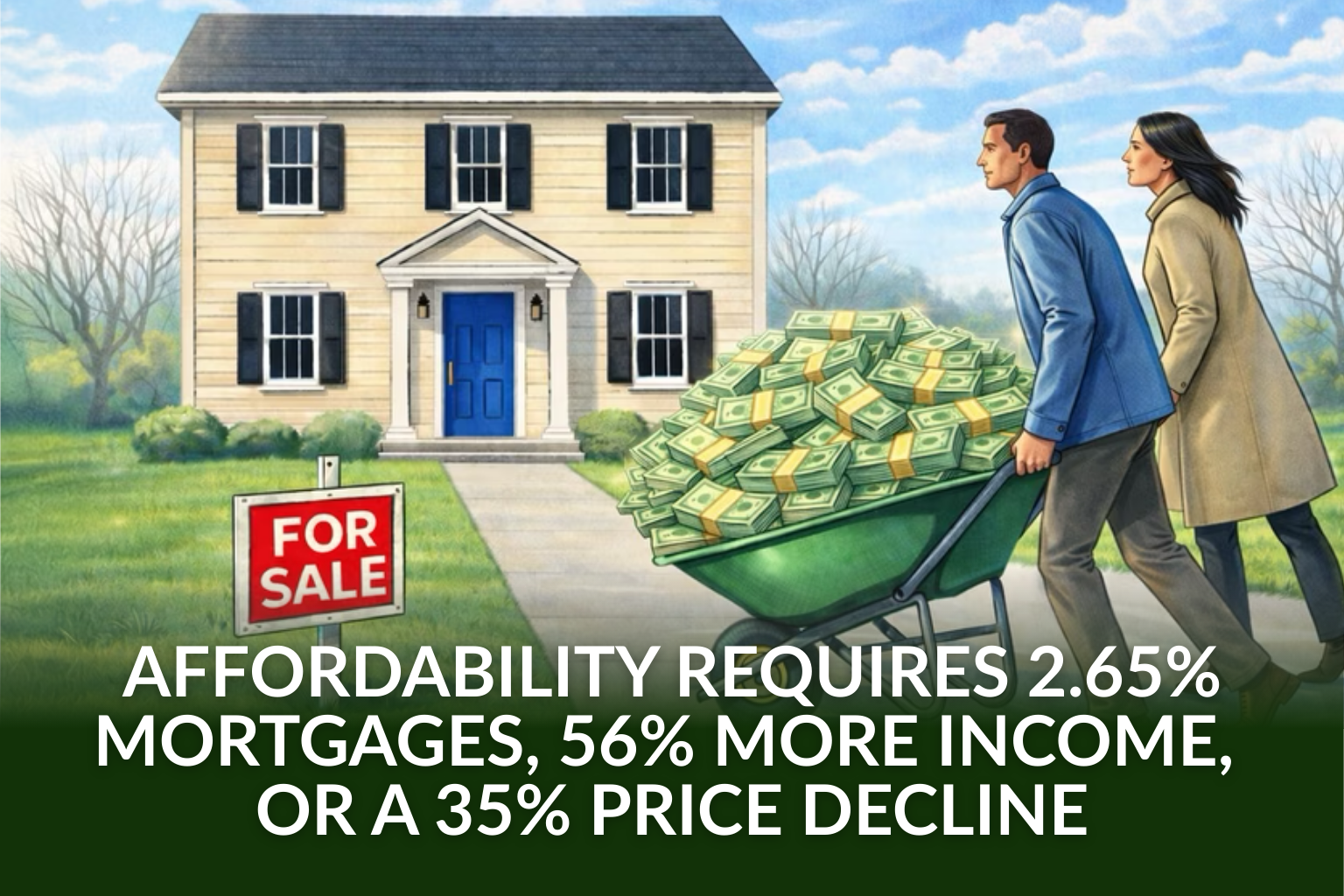
A new analysis from the Realtor.com® economic research team considers what it would take to restore home affordability to 2019 levels, when the typical mortgage payment was about 21% of the median household income, compared with more than 30% today. The analysis finds it would take:
- Mortgage rates fallingto 2.65%, down from 6.15% currently, or
- Incomes rising 56%to a median of $132,171, up from $84,763 currently, or
- Home prices falling 35%to a median of $397,963 in King County, down from $612,250 last year.
None of these outcomes are likely or expected in 2026. But the figures underscore the challenge of restoring the housing market to the relatively affordable conditions of 2019, before the COVID-19 pandemic brought severe disruptions.
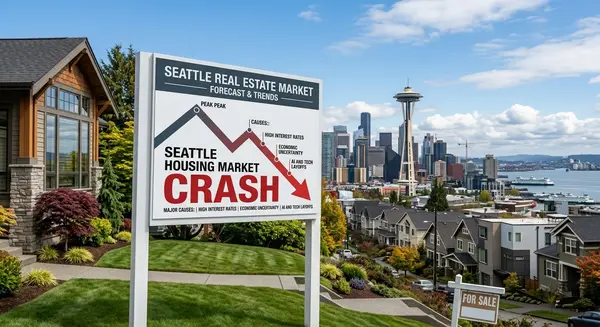
In the greater Seattle metro area homebuyers will start to get some relief in 2026, with affordability improving as income growth outpaces previous years, interest rates move slightly down, and home-prices moderately tick down. Next year will mark the beginning of a long, slow recovery for the housing market.
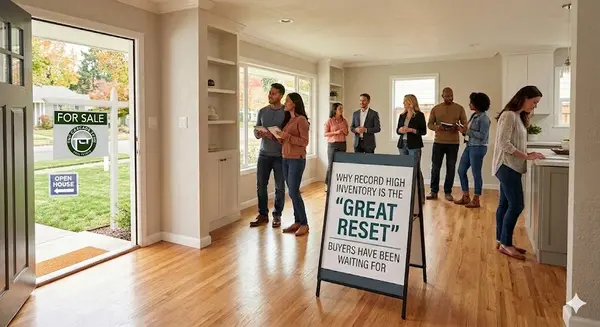
A Great Housing Reset will take shape in 2026. It won’t be a quick price correction, and it won’t be a recession. Instead, the Great Housing Reset will be a yearslong period of gradual increases in home sales and normalization of prices as affordability gradually improves. It will start next year, with incomes rising faster than home prices for a prolonged period for the first time since the Great Recession era.
By itself this reset won’t be enough to make homebuying affordable in the short run for Gen Zers and young families, who will be forced to make tradeoffs, from moving in with roommates or their parents to delaying having children. But this will be the first, significant step, in the right direction in more than a decade.
Predictions to look for in 2026

Prediction 1: Mortgage Rates Will Dip to Low-6% Range, One Factor Improving Affordability
Mortgage rates will continue their slow slide but remain high relative to the pandemic era.
The 30-year fixed rate will average 6.1% for the entire year, down from its 2025 average of 6.6%.
A weaker labor market will lead the Fed to cut interest rates in 2026 and bring monetary policy to a more neutral place, which should keep mortgage rates in the low-6% range. But lingering inflation risk and the likelihood that we’ll avoid a recession will keep the Fed from cutting more than the markets have already priced in. That’s why rates may dip below 6% occasionally, but not for any meaningful period. The Fed will change leadership in 2026, but that is also unlikely to bring significantly lower mortgage rates, as long term rates–like mortgage rates–are set by bond markets.
Prediction 2: Homebuying Affordability Will Improve As Wages Grow Faster Than Prices
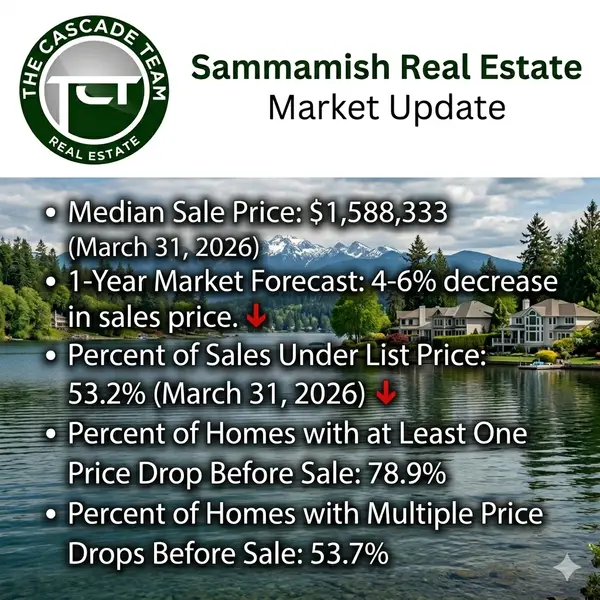
We expect the median Seattle area home-sale prices to decrease 1-5% year over year in 2026. Prices will move down marginally mostly do to rapidly increasing inventory levels, still-high mortgage rates, along with a weaker economy which will curb demand.
Windermere principal economist Jeff Tucker doesn’t expect to see any price growth in the Puget Sound region as a result of a relatively stagnant market this year.
“Our region has seen inventory basically get back to normal, prepandemic levels,” he said. “It just really feels like it’s swung around to become a buyer’s market this year.”
High mortgage rates, sweeping layoffs and economic uncertainty made buyers cautious, leaving the region with more homes for sale than usual and some listings lingering. Home sales were down slightly through the first eleven months of 2025 compared to the same period in 2024, according to Northwest Multiple Listing Service data.
Going into 2026, sellers will have to continue competing for attention by cutting prices or accepting lower offers, Tucker said.
The latest statistics from the NWMLS for December of 2025 show the median sales price for residential homes and condominiums sold in December 2025 was $612,250, down 1.8% from December 2024 ($623,500). Month over month, the median price declined 2.8% from $630,000 in November 2025.
The counties with the highest median sales prices were San Juan ($900,000), King ($808,500), and Snohomish ($730,000), while the lowest median prices were recorded in Columbia ($237,500), Okanogan ($300,000), and Pacific ($365,000).
Pending Sales or “Homes that received an offer”
There were 4,239 residential units & condo units under contract in December 2025, a slight decrease of 1.7% when compared to December 2024 (4,312). When compared to the previous month, the number of pending listings decreased by 24.3%, down from 5,600 listings under contract in November 2025.
Overall, homebuying will become more affordable with home prices moderately decreasing while wages increase for a sustained period for the first time since the aftermath of the financial crisis. The small price decrease combined with mortgage rates dipping lower than they were in 2025 means monthly housing payments will grow slower than wages, too.
Prediction 3: Seattle Area Home Sales Will Rise 10%
We predict that sales of existing homes will end 2026 up 10% from 2025. Despite increasing inventory and moderating rates home sales lagged behind 2024 numbers for most of 2025. We expect that to start changing in 2026. As median wages increase, increasing inventory forces prices on homes slightly lower, and as mortgage rates moderate pent up buyer demand will weigh those moves positively and closed homes sales will increase.
The increase in home sale activity will not be enough, however, to overcompensate for increasing inventory levels, nor will rates fall enough to spark bidding wars. Instead we’re likely to see a nice neutral balance settling into the housing market.
After years of turmoil fueled by the pandemic — ultra-low rates, bidding wars, sudden freezes — economists across the board are pointing to the same theme for 2026: improvement without chaos.
Lawrence Yun, Chief Economist of the National Association of REALTORS®, is forecasting a rebound in home sales in 2026, signaling meaningful opportunity ahead:
Prediction 4: High Housing Costs Will Reshape How People Approach Home Ownership
The improvement in affordability won’t be enough to immediately boost homeownership for young families. Gen Z and millennial homeownership rates flatlined last year, and we expect that trend to continue. Household makeup will shift further away from the nuclear family, with more adult children living with their parents and vice versa.
The portion of young adults living with their parents is down from its pandemic peak, but historically high. Roughly 6% of Americans who struggled to afford housing as of mid-2025 moved in with their parents, and another 6% moved in with roommates; we expect those shares to increase next year.
In a November Thumbtack survey of more than 100 home renovation professionals, multigenerational features, like separate suites for extended family, were the most commonly cited response when asked to predict the most popular design trend of 2026. Picture a garage that’s converted into a second primary suite for adult children moving back in with their parents.
Prediction 5: Affordability Crisis Will Unite Policymakers Across Party Lines
President Donald Trump promising to announce "the most aggressive housing reform in history" early in the new year.
The crisis has strained the market for three years, pushing home sales to 30-year lows and driving the typical first-time buyer’s age to a record 40.
Voters in the November election–especially young ones–made it clear that lowering housing costs is their top priority. Not only are sale prices and mortgage rates high, but the total cost of homeownership is rising due to skyrocketing insurance premiums and the likelihood that utility costs will surge due to large-scale AI-driven data centers.
President Trump may declare a national housing emergency to help more Americans afford homes, and other politicians on both sides of the aisle will introduce more policies to help alleviate the housing affordability crisis. The YIMBY (Yes In My Backyard) movement will pick up more supporters across party lines, opening the door for initiatives that increase housing supply: A bipartisan congressional caucus has already proposed legislation including the Yes in My Backyard Act, and the Build More Housing Near Transit Act is making its way through the government.
Other housing proposals will include zoning changes to make it easier to build ADUs and home additions. We also expect more states to tackle the housing crisis plaguing their rural residents; some will mirror New York’s focus on building manufactured and modular homes in rural parts of the state.
Sensible policies may start to chip away at the housing affordability crisis, and quixotic proposals like the 50-year mortgage may capture attention of politicians who want a quick housing fix.
But the only thing that will make homes more affordable is time. Housing costs soared much faster than earnings during the pandemic, and while wages will start outpacing home prices next year, we expect it to take about five years for the housing market to return to a semblance of normal.

Categories
Recent Posts